AI & ML
Artificial intelligence and machine learning news

The π0.7 model marks a significant advancement in robotics, enabling machines to autonomously execute complex tasks without prior task-specific programming.
April 16, 2026

OpenAI has significantly expanded the functionality of its agentic coding tool, introducing advanced features that provide users with greater control and automation across desktop environments.
April 16, 2026
Master database indexing to resolve query latency as data scales. This guide explains how to implement efficient indexing strategies in PostgreSQL to transform multi-second bottlenecks into millisecond response times.
April 16, 2026

Scaling data retrieval to meet modern user demands requires more than standard database queries; discover how Elasticsearch accelerates backend search performance and simplifies complex data navigation.
April 16, 2026
Modern cloud analytics platforms like Databricks, Snowflake, and BigQuery have streamlined data infrastructure, providing teams with scalable, high-performance solutions for rapid development and deployment.
April 16, 2026
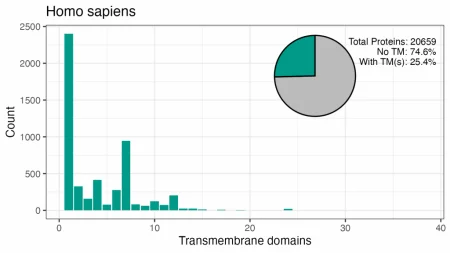
Leveraging R and UniProt data, this workflow offers a scalable approach to calculating and scanning transmembrane domains across the entire proteome, addressing a gap in current analytical tools.
April 16, 2026

This technical deep dive examines a malicious Slack installer that establishes an invisible remote desktop, providing attackers with persistent, unauthorized access to user accounts and sensitive data.
April 16, 2026

Stolen reservation data is being leveraged in sophisticated impersonation attacks, highlighting the urgent need for enhanced authentication protocols to protect guest payments and personal information.
April 16, 2026
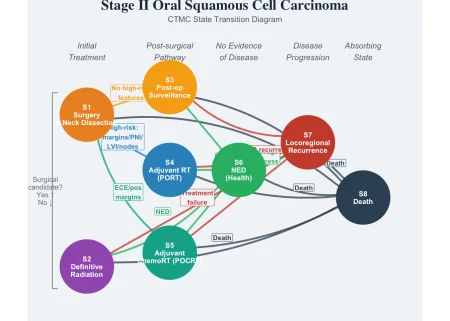
This model advances health economic analysis for Stage II Oral Squamous Cell Carcinoma by shifting focus beyond traditional managed care frameworks to provide a more versatile, data-driven methodology for clinical resource optimization.
April 16, 2026

rOpenSci bolsters its software peer review platform by welcoming Alec Robitaille and Lucy D’Agostino McGowan, enhancing the team's capacity to foster collaborative, inclusive, and high-quality open-source research tools.
April 16, 2026
Many time series models fail at inception not due to software errors, but because of fundamental flaws in incoming data architecture. Addressing these pre-processing issues is essential for building reliable, production-ready predictive models.
April 15, 2026

The Pushpaganda campaign leverages AI to weaponize browser notifications, transforming legitimate alerts into a persistent stream of deceptive content and fraudulent prompts.
April 15, 2026
Distributed via deceptive sites, GitHub repositories, and social platforms, this sophisticated infostealer employs advanced techniques to hijack user credentials and exfiltrate cryptocurrency assets.
April 15, 2026

logrittr introduces a specialized pipe operator for the R ecosystem that provides real-time, SAS-style diagnostic feedback during dplyr execution, enabling transparent data monitoring and improved workflow observability.
April 15, 2026

This guide explores advanced methodologies for addressing trait correlation within randomized block genotype experiments, offering practical techniques to improve data interpretation and experimental precision.
April 15, 2026

Advanced digital platforms are driving widespread adoption of online sports betting, transforming how users engage with live athletic events through accessible, data-driven interfaces.
April 14, 2026

Industry experts are advocating for a data-first approach to gambling risk assessments, proposing a strategic pause to validate performance metrics and refine algorithmic precision before full-scale implementation.
April 14, 2026

While blocking credit card transactions aims to curb gambling risks, evolving digital workarounds suggest that technological countermeasures are often met with rapid user-led behavioral shifts.
April 13, 2026

AI coding agents are transforming research workflows by automating complex ecological data analysis and rapid code generation, proving to be essential tools for meeting demanding research deadlines.
April 13, 2026
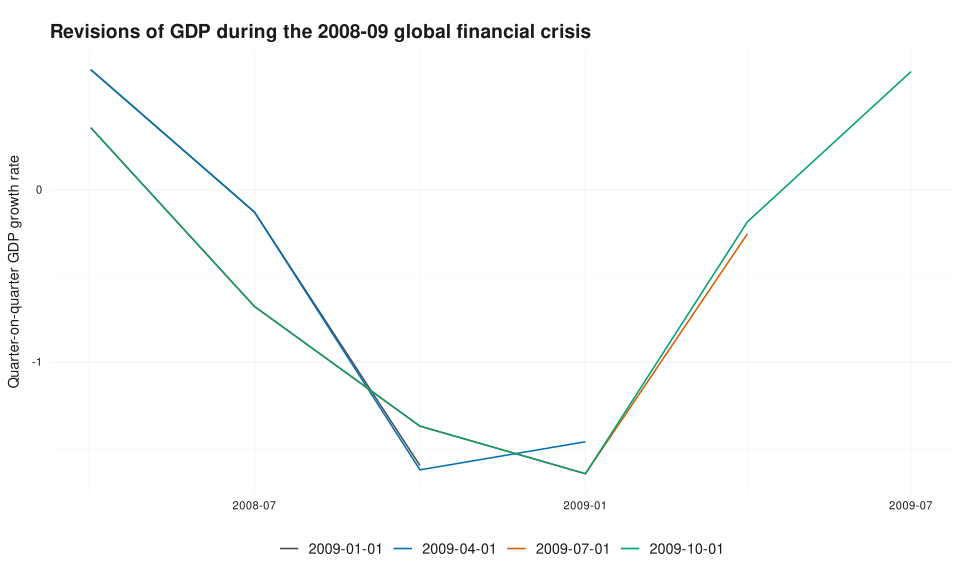
Economic statistics like GDP and employment are subject to frequent updates. The 'reviser' package provides a robust framework for managing and analyzing these evolving datasets as new source information becomes available.
April 13, 2026