Beyond Rote Programming: The Case for Emergent Robotic Generalization
For decades, industrial robotics has been defined by a rigid, binary reality: systems perform what they are explicitly taught. Success has historically been a function of repetition, meticulous environment control, and narrow, task-specific training data. Physical Intelligence, the San Francisco-based firm currently drawing significant scrutiny and massive capital, is attempting to break that cycle. Their latest research regarding the π0.7 model suggests we may be moving toward a shift similar to the one experienced by large language models, where the primary constraint is no longer the specificity of the data, but the architectural capacity of the system to remix it.
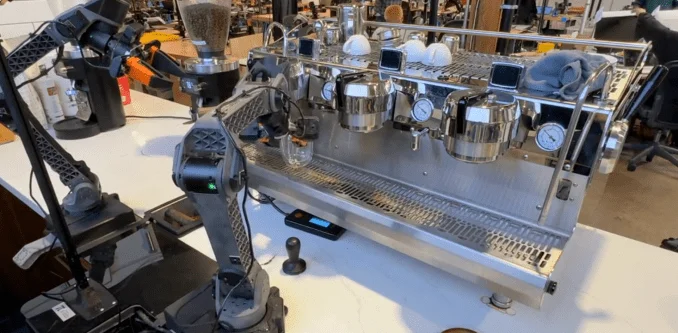
The core of the company’s claim rests on what they term “compositional generalization.” In the documentation for π0.7, the researchers illustrate how the model synthesized a functional understanding of an air fryer—an appliance essentially absent from its specific training data—by leveraging isolated episodes from separate datasets: one involving a robot closing the appliance and another where a different system placed a bottle inside one. The model didn't learn the air fryer; it learned the underlying physics of manipulation and spatial reasoning required to interface with a novel object. This aligns with observations from co-founder and UC Berkeley professor Sergey Levine, who posits that as these systems transcend rote imitation, capabilities begin to scale super-linearly with data, mirroring the emergent behaviors seen in vision and text models.
The implications for robotics deployment are practical rather than abstract. Currently, integrating a robot into a new workflow requires high-cost data collection and bespoke model training. π0.7 suggests a different path: using natural language guidance to coach a general-purpose model in real-time. During testing, researchers reported that while the raw model struggled with air fryer operation, a brief thirty-minute iteration of “prompt engineering”—verbal coaching akin to training a human hire—boosted success rates from 5% to 95%. This suggests that the future of robot adaptability may lie in human-in-the-loop linguistic refinement rather than expensive backend parameter tuning.
However, this shift introduces a significant technical challenge: the “black box” of behavior. As researcher Lucy Shi noted, pinpointing the source of a model’s success or failure is becoming increasingly opaque. When a system functions correctly on a novel task, it is often a result of synthesis so complex that even the researchers who built the model cannot immediately decompose the logic. This is a marked departure from traditional industrial automation, where fault detection is deterministic. In the world of π0.7, engineers are finding themselves surprised by the model's competence—a sentiment confirmed by research scientist Ashwin Balakrishna, who described the robot successfully manipulating a gear set it had never before encountered.
Skepticism remains the prudent baseline for any industry professional. The researchers readily admit to significant limitations, most notably the inability to handle high-level, multi-step tasks autonomously. You cannot simply command the system to “make toast”; you must narrate the constituent actions. Furthermore, the lack of standardized robotics benchmarks leaves observers relying on the company’s internal comparisons against its own specialist predecessors. While the company claims performance parity in tasks like folding laundry and assembling boxes, these demos lack the rigor of public, adversarial evaluation.
The disconnect between the “boring” nature of these demos and the excitement of the research team is telling. While critics often look for cinematic feats—the robotic equivalent of a backflip—the engineering reality is that generalization is inherently less dramatic. A robot that can fold laundry is, from an engineering perspective, infinitely more useful than one that can perform a single, pre-choreographed stunt. Nevertheless, the gulf between these laboratory successes and a viable, industrial-grade product remains wide. When pressed for a commercialization timeline, the leadership at Physical Intelligence—an organization that has already raised over $1 billion and is reportedly eyeing a valuation north of $10 billion—remains pointedly non-committal.
For those tracking this space, the story is not that a robot has learned to use an air fryer. The story is the apparent erosion of the barrier between training data and novel application. If Physical Intelligence’s hypothesis holds—that we are witnessing the start of a scaling law for physical interaction—the next phase will not be about building better robots, but about determining how much control we are willing to cede to systems whose reasoning processes we cannot fully trace. Until the company moves from lab-based synthesis to predictable, repeatable commercial environments, these results should be viewed as an early signal of a potential architecture shift, rather than a finished product.
Watch for whether the next iteration of the model can move beyond verbal hand-holding to autonomous task planning. That transition—from a system that needs to be coached to one that can observe and deduce—is where the real pivot from research to industry will occur. Until then, the high valuation reflects a bet on the potential of that pivot, not on the utility of the current demo.