Development
Programming languages, frameworks, and development tools

Explore the practical application of ggplot2 combined with Scico color palettes to create sophisticated, high-impact data visualizations through modular coding techniques.
April 18, 2026

Elevate your developer presence beyond simple code repositories by leveraging GitHub’s advanced customization tools to showcase your technical expertise and projects effectively.
April 18, 2026
Context Hub solves the persistent challenges of LLM hallucinations and memory limitations, providing a robust architecture to maintain API accuracy, track version-specific details, and ensure long-term state persistence.
April 17, 2026

Anthropic and OpenAI have released major updates to Claude and Codex, significantly enhancing coding capabilities while adjusting token economics and usage thresholds for developers.
April 17, 2026

While automated token-heavy workflows increase raw code output, they often result in bloated technical debt and significant overhead from iterative refactoring.
April 17, 2026

Discover the core features, AI models, and search capabilities of Perplexity. Learn how this platform integrates real-time web indexing with generative AI to offer a high-performance alternative to traditional LLM-based assistants.
April 17, 2026

Microservices architecture enables healthcare portals to scale, secure sensitive data, and evolve rapidly. Using ASP.NET 10 and C#, you can build independent REST APIs for services like patients, appo
April 17, 2026

Anthropic’s Claude Code Routines enable teams to deploy automated, event-driven workflows for scheduled tasks, GitHub integrations, and API interactions within managed cloud environments.
April 17, 2026

The updated OpenAI Agents SDK introduces sandboxing and a model-native harness, providing developers with improved control and reliability for building complex, long-horizon AI agents.
April 17, 2026
Platform engineering teams face significant debugging challenges when AI-driven coding assistants lack integrated runtime visibility, hindering the ability to monitor and troubleshoot live application performance.
April 17, 2026

Achieve scalable e-invoicing by aligning cross-functional workflows between tax, finance, and IT teams to optimize digital transaction efficiency and system performance.
April 17, 2026

Comparing programming languages highlights unique design trade-offs and architectural approaches. This guide explores the practical application of creating Schotter plots in R to demonstrate these functional concepts.
April 17, 2026

Arriving April 24, 2026, R 4.6.0 (“Because it was There”) introduces several notable performance improvements and feature updates designed to streamline statistical workflows and language functionality.
April 16, 2026
Modern web data is dynamic and high-volume, spanning live pricing, job boards, and news. This guide evaluates how AI-driven scraping techniques outperform traditional methods in extracting and organizing these shifting datasets.
April 16, 2026

Anthropic has enhanced Claude Code with repeatable routines and a revamped workspace, enabling developers to automate complex tasks and streamline iterative coding processes.
April 16, 2026

OpenAI has significantly expanded the functionality of its agentic coding tool, introducing advanced features that provide users with greater control and automation across desktop environments.
April 16, 2026
Master database indexing to resolve query latency as data scales. This guide explains how to implement efficient indexing strategies in PostgreSQL to transform multi-second bottlenecks into millisecond response times.
April 16, 2026
Scaling data retrieval to meet modern user demands requires more than standard database queries; discover how Elasticsearch accelerates backend search performance and simplifies complex data navigation.
April 16, 2026
Modern cloud analytics platforms like Databricks, Snowflake, and BigQuery have streamlined data infrastructure, providing teams with scalable, high-performance solutions for rapid development and deployment.
April 16, 2026
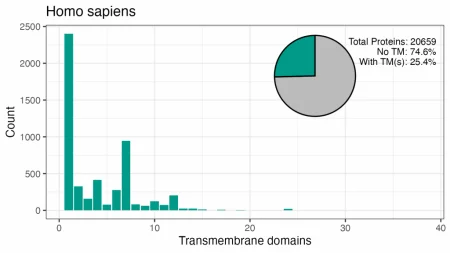
Leveraging R and UniProt data, this workflow offers a scalable approach to calculating and scanning transmembrane domains across the entire proteome, addressing a gap in current analytical tools.
April 16, 2026