The Verification Bottleneck: Why AI-Driven Engineering is Stalling in Production
The promise of AI-assisted engineering has always been velocity. If large language models can slash the time required to draft boilerplate or synthesize complex logic, the net result should be a streamlined path to deployment. However, data from Lightrun’s State of AI-Powered Engineering Report 2026 reveals a stark disconnect between coding speed and operational stability. By polling 200 SRE and DevOps leaders across the U.S., UK, and EU, the report exposes an uncomfortable truth: our current observability frameworks are ill-equipped to handle the erratic output of generative coding assistants.
The core issue is architectural. Current AI coding assistants function primarily through pattern recognition and static analysis; they synthesize code based on probability rather than execution. They are fundamentally disconnected from the runtime environment. Consequently, code that appears syntactically correct in a pull request often fails under the pressure of real-world variable states, memory constraints, and asynchronous system behaviors. The data bears this out: 43% of AI-generated code still mandates manual debugging in production, even after clearing standard QA and staging gates. We are trading the friction of writing code for the significantly higher friction of debugging black-box output.
The Redundancy Tax
For engineering leadership, the hidden cost of this AI adoption is manifest in repetitive redeployment cycles. Lightrun’s findings suggest that 88% of organizations are locked into a cycle of two to three manual redeployments simply to confirm that an AI-proposed fix is functional. This is not just a nuisance; it is a significant drain on human capital. Developers are currently hemorrhaging an average of 38% of their work week—nearly two full business days—on troubleshooting and verification, effectively neutralizing the productivity gains promised by their IDE-based copilots.
This reality has triggered a rush toward AI-powered SRE tooling, designed to automate incident response and root cause analysis. Yet, these tools suffer from the same grounding problem as their development counterparts. According to the report, 77% of engineering leaders express a lack of confidence in their existing observability stacks to support automated remediation. The diagnostic tools in place today were built for human operators to inspect, not for autonomous agents to interpret. When an AI agent attempts to reason over infrastructure signals, it lacks the fine-grained runtime visibility—such as live memory snapshots or granular variable state tracking—necessary to make high-stakes decisions with any degree of certainty.
Tribal Knowledge vs. Algorithmic Evidence
Perhaps the most damning metric is the persistence of human-centric troubleshooting in the face of widespread automation. Despite the prevalence of sophisticated Application Performance Management (APM) and nascent AI-SRE platforms, 97% of leaders report that these systems lack sufficient visibility into production behavior. As a result, when a high-severity incident occurs, over half of all resolutions still rely on “tribal knowledge”—the undocumented, legacy intuition held by veteran engineers—rather than empirical evidence extracted from telemetry.
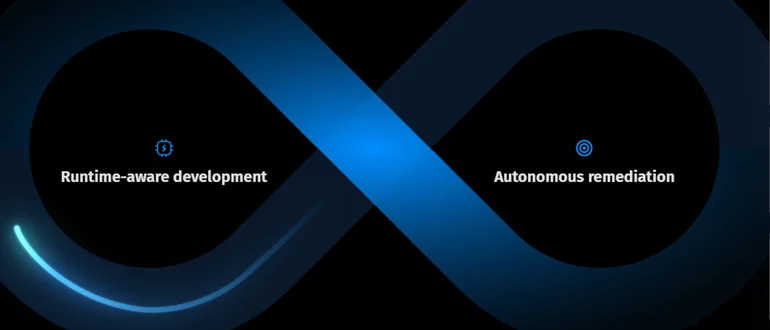
This reliance on tribal knowledge exposes a structural fragility in modern DevOps. We have accelerated the delivery of software, but we have failed to build a corresponding mechanism to verify that software in real-time. By pushing code faster than we can validate it, we are essentially offloading the complexity of verification from the development phase to the production phase. Without a fundamental shift toward "shifting runtime visibility left"—integrating live execution data directly into the AI reasoning loop—autonomous engineering will remain a aspirational concept rather than a practical reality.
Beyond the Static Paradigm
The industry is currently caught in a cycle of speculative engineering. AI agents are being treated as authoritative sources, yet they operate in a vacuum, detached from the very production metrics they are tasked with improving. To bridge this gap, organizations must move beyond reactive observability. Providing AI agents with access to real-time variable states and request tracing is no longer a luxury; it is a prerequisite for moving beyond the current trial-and-error deployment cycles.
Until AI agents can access and process live runtime data, the role of the human engineer will not be diminished, but rather shifted toward the role of an overworked proofreader. True autonomy requires grounded reasoning, and until the observability stack catches up with the velocity of generative code, the bottleneck will only widen. Leadership should prioritize integration of runtime diagnostics as a foundational requirement for any automated deployment pipeline, or prepare for a future where debugging occupies an even larger slice of the engineering budget.
The shift required is not merely about better tooling, but about rethinking the feedback loop between production and development. If the code cannot prove its own readiness at runtime, then the speed at which it was generated is largely irrelevant. Moving forward, the focus must shift from the volume of code generated to the reliability of the execution path, moving away from static assumptions toward a model of continuous, evidence-based runtime verification.