For two decades, Bioconductor has stood as the gold standard for bioinformatics, maintaining a rigid, high-fidelity repository model that served as the bedrock of reproducible computational biology. Yet, that consistency came at a steep price: a proprietary, bespoke build architecture that has become increasingly difficult to scale. Faced with mounting technical debt and the sheer overhead of maintaining custom workflows, the project is now pivoting toward a modular modernization strategy, anchoring its future to the R-universe platform.
This collaboration, formalized under the R Consortium’s Infrastructure Steering Committee, marks a departure from insular development toward a shared-infrastructure model. The goal is to offload the heavy lifting of package distribution and binary builds—traditionally a resource-intensive burden for the Bioconductor team—without compromising the stringent governance and peer-review requirements that define the project.
Decoupling Infrastructure from Governance
The core tension in scientific software distribution is how to evolve infrastructure without breaking brittle, legacy workflows. Bioconductor’s approach here is conservative, opting for a “piece-wise” integration rather than a wholesale migration. By leveraging R-universe as a backend, the team has already begun shifting its binary generation for Windows and macOS to the new system, effectively outsourcing the maintenance load that previously demanded internal oversight.
This transition utilizes two distinct R-universe instances—https://bioc-release.r-universe.dev for stable production and https://bioc.r-universe.dev for ongoing development—to map directly onto Bioconductor’s existing release/devel dichotomy. This alignment allows contributors to access modern CI/CD benefits, such as transparent dependency graphs and cross-platform build logs, via the 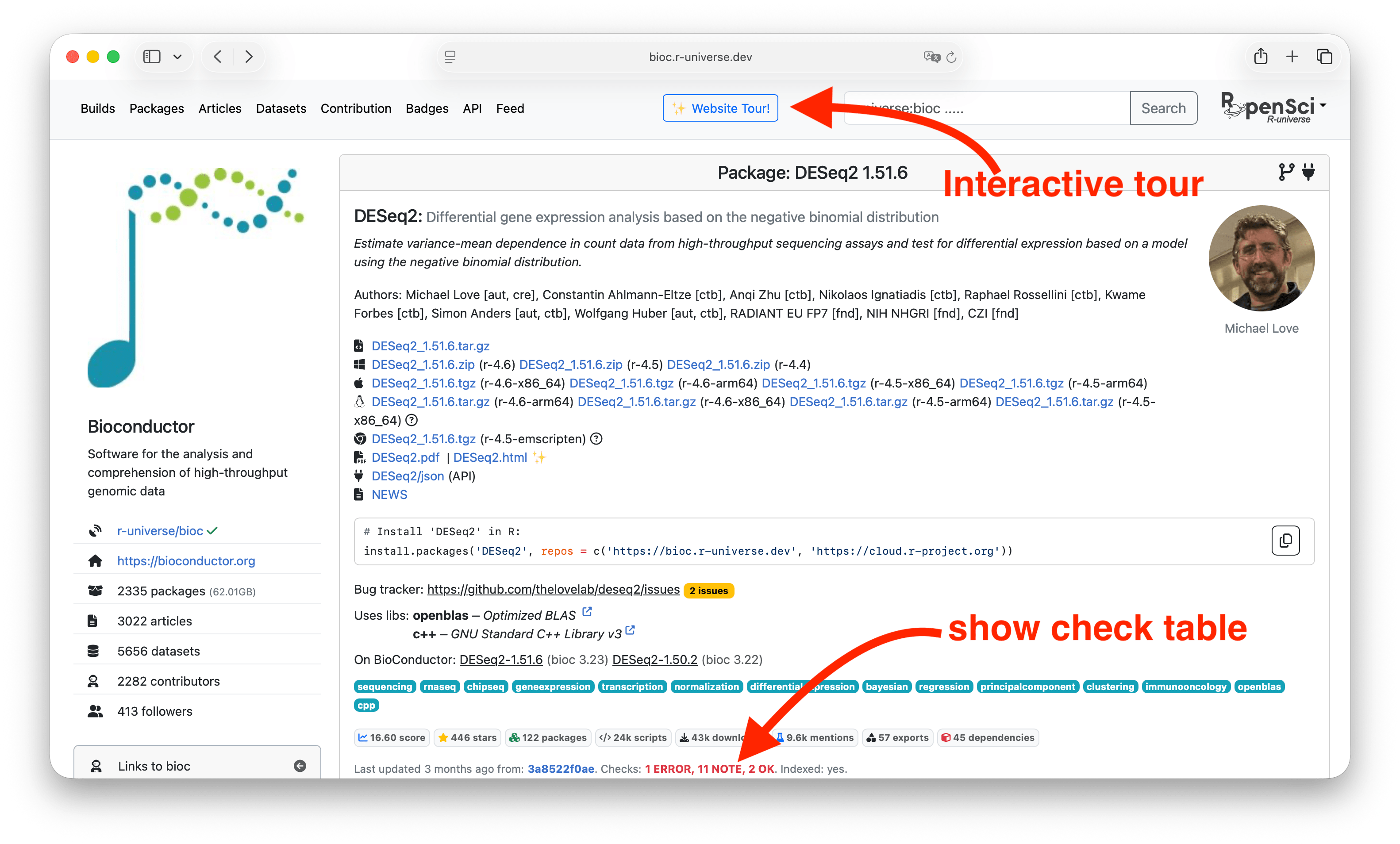 interface without needing to overhaul their individual package management systems.
The Shift Toward Transparent CI
For the average developer, the most significant change is the shift toward a more modern, observable pipeline. Bioconductor maintainers are now being directed to https://docs.r-universe.dev/bioconductor/ to understand how their packages interact with these new build environments. The integration extends beyond mere compilation; by surfacing extended BiocCheck diagnostics through the R-universe dashboard, the project is essentially democratizing access to quality control data that was once gated behind the main repository’s internal processes.
While the technical benefits—such as reproducible GitHub Actions-based environments—are clear, the project is proceeding with caution. The roadmap suggests a phased integration where R-universe metadata will eventually feed into Bioconductor’s own health monitoring tools. For the maintainer, this means the current "black box" of build failures will become increasingly transparent, though it introduces a new dependency on R-universe’s uptime and tooling stability.
Implications for the Bioinformatics Ecosystem
The significance of this partnership lies in its rejection of "reinventing the wheel." By aligning with a project like R-universe, Bioconductor is acknowledging a reality that many long-running open-source projects eventually face: custom build tooling is a liability, not an asset. The intent is to shift the human capital of the Bioconductor team away from infrastructure maintenance and back toward the core mandate of community curation and scientific verification.
For industry observers, this represents a broader trend in R-based scientific computing toward consolidation. As the complexity of modern bioinformatics libraries grows, the traditional model of fragmented, siloed build systems is proving unsustainable. By aggregating build logs, binary distribution, and package health metrics onto a shared, open-source infrastructure, the R community is creating a more resilient software stack.
The success of this endeavor will hinge on the Bioconductor team's ability to maintain its rigorous standards while ceding control over the underlying build systems. If they can successfully navigate the inevitable friction of this transition, the resulting architecture will likely serve as a blueprint for other specialized scientific repositories. The real test won't be the initial integration, but how the system handles edge cases in dependency management and platform-specific compilation as the scale of the repository grows.
For those currently managing Bioconductor packages, the immediate takeaway is clear: watch the integration milestones closely. The shift toward R-universe is not just a backend change; it is a fundamental shift in how documentation, quality metrics, and package visibility will be handled moving forward. Those who get ahead of the documentation and align their workflows now will be better positioned as the project continues its move toward this harmonized infrastructure.