Scaling Technical Pedagogy: Infrastructure as Code for Courseware
Managing a portfolio of over 50 data science courses creates a unique technical debt trap. As Jumping Rivers approaches a decade of operation, the challenge of maintaining code-heavy curricula—split roughly 50/30 between R and Python—has shifted from a pedagogical concern to an engineering problem. When the underlying libraries update, or the languages themselves evolve, the content risks becoming a collection of broken snippets and deprecated syntax. The organization’s response offers a blueprint for teams grappling with similarly large-scale, document-centric codebases.
The Shift to Executable Documentation
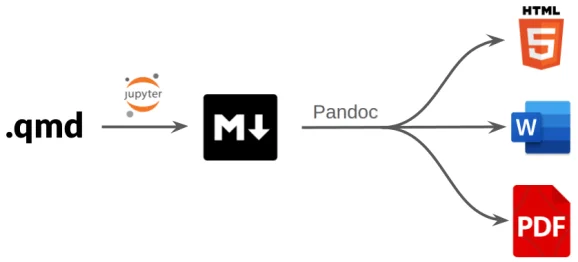
The primary friction point in technical training is the separation of prose from logic. Traditional copy-pasting of code blocks into slides or manuals ensures obsolescence. By treating courseware as a software project rather than a publication project, teams can leverage automated reporting frameworks like R Markdown and Quarto. These tools transform documentation into an executable environment where code chunks are rendered at build time.
This approach forces a form of "continuous validation." If a specific dependency or language update breaks a script, the build pipeline fails immediately. By embedding the logic directly into the document format—whether it involves R, Python, or even SQL—the author ensures that the presented examples are functionally verified against the current environment. Effectively, the courseware becomes its own test suite.
Standardization Through Internal Abstraction
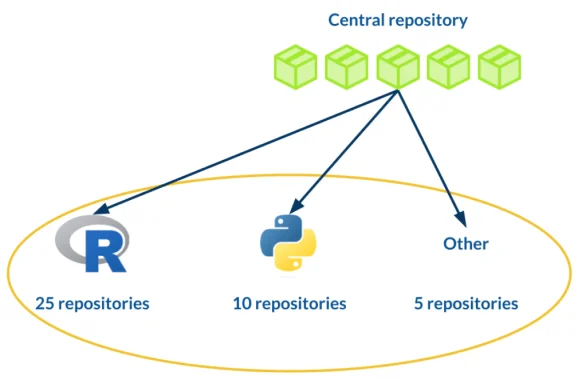
While automation handles the execution of content, managing the surrounding infrastructure—styling, formatting, and administrative overhead—requires aggressive abstraction. Manually scaffolding new courses creates drift; different folders, inconsistent CSS, or disparate deployment scripts become impossible to audit. The solution lies in migrating reusable assets into internal R packages.
By moving organizational branding, template files, and build routines into a centralized package, developers can focus exclusively on course content. A unified package structure enforces uniformity: the look of the slides, the structure of the exercises, and the build logic for rendering become immutable properties inherited by every new project. Beyond course creation, this architecture extends to operational workflows, including automated generation of attendee certificates, feedback aggregation, and the provisioning of cloud-based training environments via platforms like Posit Workbench.
GitLab CI/CD: The Enforcement Layer
The logical extension of standardized packaging is a rigid Continuous Integration (CI) and Continuous Deployment (CD) pipeline. For large course catalogs, ad-hoc updates are a security and reliability risk. By leveraging GitLab, organizations can mandate that no course update reaches the end user without passing automated checks. Every repository, regardless of its specific content, inherits the same pipeline rules defined at a higher directory level.
This setup effectively automates quality control. The pipelines perform three critical functions:
- They ensure the build integrity of notes and scripts before merging.
- They enforce peer review through mandatory branching workflows.
- They automate the deployment of production artifacts.
Most significantly, these pipelines are not merely reactive; they are proactive. Scheduled monthly runs ensure that even stagnant courses are constantly re-tested against current versions of dependencies. This "heartbeat" monitoring flags issues long before a trainer opens the files to deliver a session.
Strategic Takeaways for Engineering Teams
The core lesson here is the rejection of the "unique project" fallacy. Too often, technical projects are treated as bespoke entities, leading to fragmented tooling and inconsistent quality. By applying infrastructure-as-code principles—standardizing through packages, automating through CI/CD, and validating through execution—teams can turn chaotic, multi-faceted portfolios into manageable, predictable assets.
For those interested in the underlying mechanics of these systems, further reading includes:
- Quarto for the Python user
- Parameterised presentations with Quarto
- Writing a personal R package
- A deep dive into creating a Python package
- A comprehensive look at R package quality
Maintaining a large-scale project is not about having fewer components; it is about having a higher degree of control over how those components interact. If the infrastructure does not automate the boring, repetitive parts of development, the human contributors will inevitably make errors. The next step for such systems is moving toward containerized parity between the development and production environments, ensuring that what the trainee sees is an exact replica of the verified, tested build.
For updates and revisions to this article, see the original post