Standardizing the R Modeling Workflow
The R ecosystem has long been characterized by a proliferation of packages, each implementing distinct machine learning algorithms with idiosyncratic APIs. While this modularity fosters innovation, it imposes a significant cognitive tax on practitioners who must navigate varied parameter specifications and inconsistent prediction methods whenever they swap between, say, glmnet and ranger. The release of the mlS3 package, a new initiative from the Techtonique project, aims to resolve this fragmentation by imposing a unified S3 interface across common modeling tasks.
By abstracting underlying packages under a consistent wrap_* training pattern and a standard predict() call, mlS3 attempts to commoditize the interface rather than the engine. The package is not designed to replace these underlying libraries or rewrite their core logic; instead, it serves as a thin compatibility layer. For industry professionals juggling multiple model types, the immediate utility lies in minimizing the pipeline friction typically associated with model experimentation.
Architectural Simplification
The core philosophy of mlS3 relies on the R S3 generic-method dispatch mechanism to normalize disparate modeling workflows. For a user, this translates to a predictable two-step operational sequence: initiating the training process via wrap_* and executing inference with a standardized predict() method.
The package currently provides wrappers for a foundational set of workhorse algorithms:
wrap_glmnet()for generalized linear models.wrap_lightgbm()for gradient boosting frameworks.wrap_ranger()for high-performance random forests.wrap_svm()for support vector machines (viae1071).wrap_caret(), which serves as a gateway to the broadercaretecosystem, supporting over 200 distinct model types.
This abstraction is particularly useful for rapid benchmarking. By funneling different algorithms through an identical input/output structure, practitioners can automate model selection loops without manually re-engineering the prediction logic for each specific class of model.
Implementation and Performance Observations
In practice, mlS3 functions as a wrapper that passes parameters to the underlying library. While the API is unified, users must still consult the documentation of the underlying package (such as glmnet or lightgbm) to understand the nuances of the parameters being passed. The package is currently available for installation via remotes::install_github("Techtonique/mlS3").
A notable design choice is the inclusion of the wrap_caret() function, which effectively brings the immense breadth of the caret framework into the mlS3 fold. For complex tasks—such as parameter tuning within a random forest workflow—this allows the user to benefit from caret's extensive infrastructure while maintaining the clean, minimalist calling convention of the mlS3 suite.
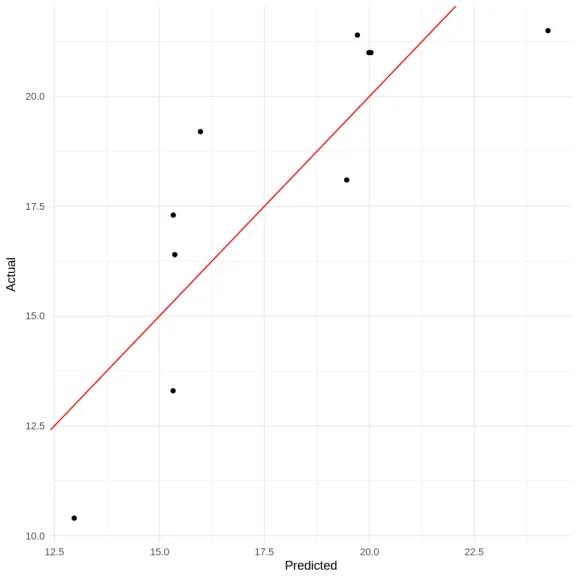
However, the package does not inherently prevent user error. During testing, inconsistent results in multiclass classification using lightgbm underscore a critical reality: while mlS3 standardizes the syntax, it does not standardize the assumptions of the underlying models. The burden of configuring specific objective functions, handle class imbalances, or managing feature scaling remains with the data scientist. The package's utility is limited to streamlining the implementation, not automating statistical rigor.
The Trade-off of Abstraction
The industry has seen several attempts to unify R’s modeling landscape, most notably the tidymodels ecosystem. The difference here is the deliberate use of S3 classes to maintain a lightweight footprint. mlS3 is intentionally minimal. It lacks the heavy dependency graph and the expansive meta-framework requirements of larger modeling suites, which may appeal to developers who prioritize portability and low overhead.
For those managing production pipelines, the primary risk of using any wrapper is the potential for "black-boxing" critical model diagnostics. Since mlS3 is an abstraction layer, users should ensure they are still capable of reaching through the wrapper to inspect the underlying model objects if debugging or custom hyperparameter optimization becomes necessary. The current implementation appears to prioritize developer ergonomics over exhaustive model management features.
Strategic Implications
The introduction of mlS3 reflects a broader trend toward API stability in the R data science community. As machine learning stacks become more modular, the ability to hot-swap models—testing a ranger implementation against a lightgbm baseline, for instance—is becoming a baseline requirement rather than an advanced capability.
Moving forward, the success of this package will depend on its maintainer's ability to keep pace with the updates of the underlying libraries it wraps. Every upstream API change in lightgbm or glmnet necessitates an update to the corresponding wrapper in mlS3. If the package can maintain that synchronization without bloating, it will likely find a niche among researchers and developers who need to iterate rapidly without being bogged down by the syntactical heterogeneity that has defined R’s modeling landscape for over a decade.
Practitioners should begin by evaluating mlS3 for small-to-medium-scale pipelines where swapping algorithms is a frequent activity. It is not currently a replacement for comprehensive model management, but it is a significant step toward making the R modeling experience more predictable and less repetitive.